
Your Neighbor’s Home Sold for More. Will Yours?

Your Neighbor’s Home Sold for More. Does That Mean Yours Will Too?
Part 2 of our series: What Is Your Broward Home Really Worth?
The house down the street just sold for a price that made you stop scrolling.
You know that house. You have a bigger yard. Your kitchen looks nicer. Now you are wondering, “If they got that much, what could we get?”
It is a fair question. That sale may be good news for you. But before you build your moving plans around it, we need to look beyond the number.
Your neighbor’s sale is a clue. It is not a price tag for your home.
Does my neighbor’s sale price mean my home is worth the same?
Not automatically. A nearby sale helps show your home’s possible value when the properties are similar. Differences in living space, condition, location, features, sale timing, and seller-paid credits can change the comparison. One sale should be weighed alongside other relevant sales and today’s competition.
Your home might support a higher price, a lower price, or something close. The details help us understand which.
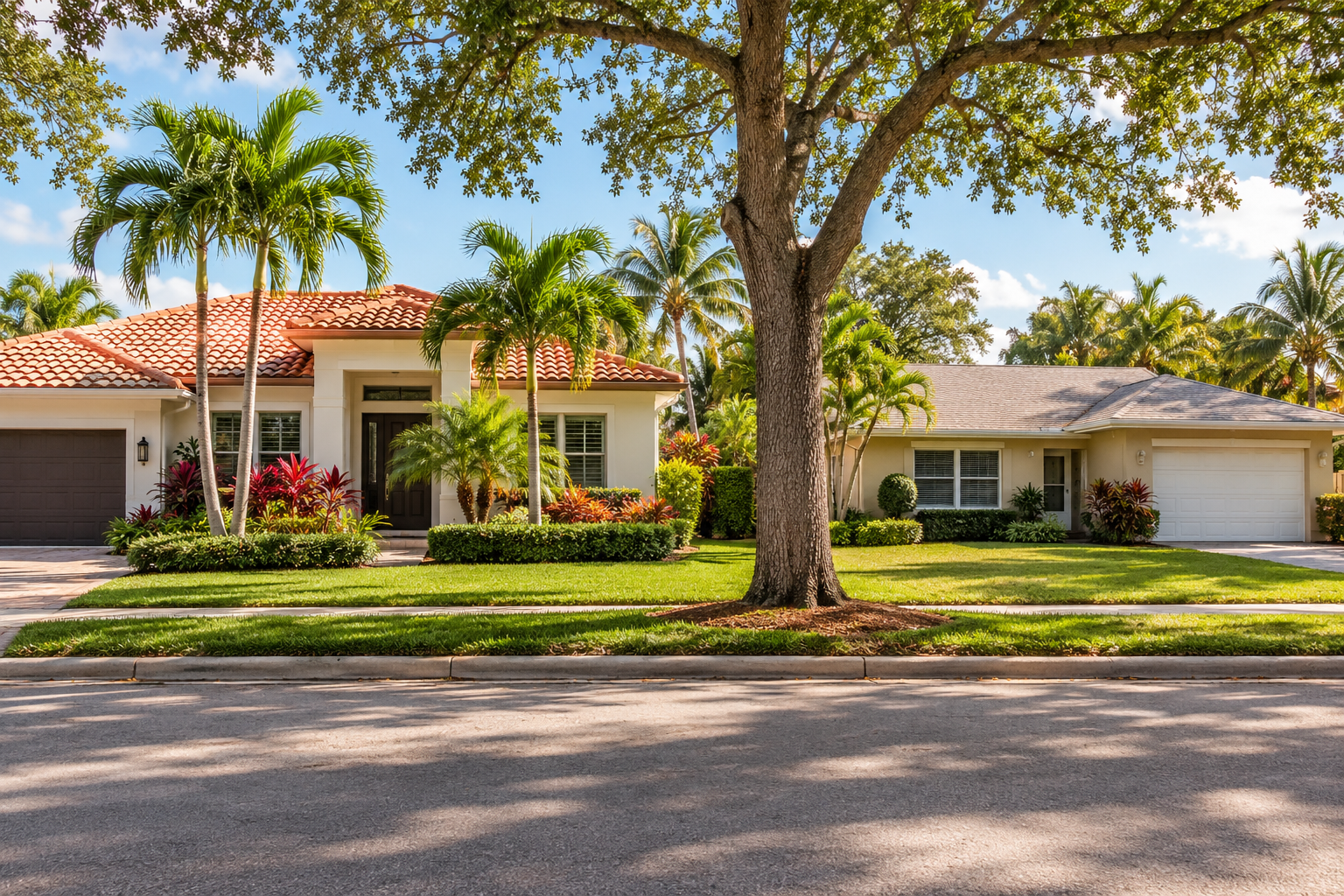
Start with what actually sold
A listing price is what a seller asks. A closed sale price is what the transaction recorded.
Before treating a neighbor’s number as your benchmark, confirm that the home closed. A listing marked “pending” is under contract, but its final price may not be public yet.
Then check the property itself. Was it larger than it looked? Did it have another full bathroom? Was there a major renovation you never saw from the street?
The National Association of REALTORS® identifies size, location, amenities, and condition as factors in an agent’s pricing recommendation.
Same street does not always mean the same value
Imagine two three-bedroom homes in Plantation. They look similar from the sidewalk.
One backs onto a busy road. The other has a quiet backyard. One has a roomy primary bathroom. The other has a small bath that buyers may want to update.
Those differences may shape what a buyer is willing to pay.
Useful comparisons look at more than a shared ZIP code or bedroom count. We consider living space, layout, lot, condition, and features that matter to the same group of buyers.
Fannie Mae’s appraisal guidance calls for comparable homes with similar physical and legal characteristics. It also recognizes that the best comparison may come from a competing neighborhood. An appraisal is different from an agent’s pricing analysis, but both require thoughtful comparisons.
The closest sale is not always the most useful sale.
A higher sale price may come with a detail you cannot see online
Sometimes a seller helps pay a buyer’s closing costs or agrees to a repair credit. That can matter when we study the transaction.
Here is a simple example using made-up numbers:
A home closes at $700,000, and the seller provides a $15,000 buyer credit. Subtracting that credit leaves $685,000 before the seller’s other costs.
The recorded sale price is still $700,000. The example simply shows why the headline number does not tell the whole story.
It also does not mean we automatically lower your home’s value by $15,000. Fannie Mae’s appraisal guidance says the effect of a concession should reflect the market’s response, rather than a routine dollar-for-dollar deduction.
When available, those transaction details help us make a more useful comparison.
When the buyer agreed to the price matters, too
A closing date does not tell us exactly when the price was negotiated.
Your neighbor may have accepted an offer weeks before closing. Since then, buyers may have gained more choices, a competing home may have reduced its price, or borrowing costs may have changed.
We need to understand the market around that sale and the market you would enter now.
An older sale can still be useful. A newer sale can still be a poor match. Recency helps, but similarity and market conditions matter, too.
Your improvements deserve attention, not a guess
Maybe your home has a newer roof, storm protection, or a kitchen that shows beautifully.
Those features deserve a closer look. But there is no reliable rule that says every new roof, pool, or kitchen adds the same fixed amount to every Broward home.
Buyers may value an improvement differently depending on its quality, age, and what competing homes offer.
Before you spend money trying to match the neighbor’s sale, let’s review what you already have. The right next step may be a small repair, better presentation, or gathering records that help explain your home’s condition.
Let’s find out what that sale means for you
It's all part of the TLC - The Tokar Level of Care.
At The Chriz Tokar Team, we are Certified Pricing Strategy Advisors (PSA). We use that training and our local knowledge to help you understand which sales deserve attention and where the differences matter.
Send us the address of the home that caught your eye. We can review available sale details, walk through your property, and compare it with other relevant homes.
Then we can explain a supported price range, discuss preparation, and help you see how a sale could fit your next move. If you are downsizing, we can also prepare a property-specific estimated net sheet so you can plan around more than a hopeful sale price.
You deserve a clear explanation of what the numbers mean for your home.
Call The Chriz Tokar Team at 954-600-7427 to arrange your in-home valuation. Let’s turn that neighbor’s sale into useful information for your own plans.
Common questions about a neighbor’s home sale
Can I ask more than my neighbor received?
Yes, if your home’s features, condition, and current market evidence support it. A neighbor’s sale does not set a firm ceiling or guarantee a minimum price.
Should I use the highest sale in my neighborhood?
Only if it is a useful comparison. An unusually large, renovated, or differently located home may give you the wrong starting point.
Does a seller credit change the recorded sale price?
A credit generally does not change the recorded sale price itself, but it can affect the seller’s proceeds and how the transaction is analyzed.
Is a home with the same number of bedrooms a good comparison?
It may be, but bedroom count alone is not enough. Living space, bathrooms, layout, location, and condition also need attention.
What should I gather before an in-home valuation?
Have a list of improvements, approximate installation dates, and any helpful permits, warranties, or repair records. Bring the neighbor’s address, too. We can help you sort through the rest.
For More Information contact:
Chriz Tokar and Bruce Field – 954-600-7427
The Chriz Tokar Team
RE/MAX Advance Realty